Thursday, April 19, 2007

Violence, Schools and the Limits of Standardization

In the wake of this week's shocking massacre at Virginia Tech, we hear pundits on cable and network news repeating theories about "warning signs" and how teachers, educational institutions, and social service entities should recognize them.

No one has mentioned a cruel irony. Since publication of the A Nation at Risk report in 1983, schools have in fact been preoccupied with other "warning signs" indicated by numbers on standardized tests. Is the student performing at below basic level? Put him in a special class devoted solely to test strategy. Does he need counseling? Well, there's no money in the budget. Does he have any other problems? Sorry, the documentation is spotty on that. Have you had problems with him? We'll get to it eventually--how are his scores? If he gets to college, all our problems will be solved.

The compartmentalized view of what happens in classrooms has come at the tragic expense of a holistic view of student life as a matter not simply of mastery but of social connectedness. In fact, listening to the seething display of Cho Hui on his DVD recordings, one can't help but notice the desperate, angry ravings of a person who opted for mastery at the expense of everything else--empathy, coherence, other human lives, and ultimately his own. As deranged as Hui may have been, we must acknowledge that he parroted all too well a zero-sum attitude which now pervades our educational culture and has long dominated our reality entertainment, our foreign policy, and our love of outlaw masculinity.

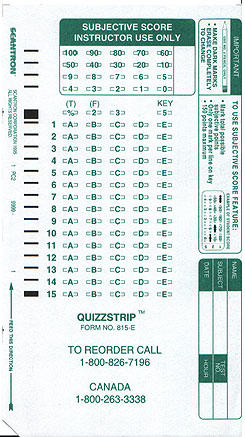
Teachers do notice disconnects in their intimate work with individual students on a daily basis. But noticing doesn't seem to matter these days. Are you on script? Did you fill in the bubble sheets? Can the students identify the standard for today's lesson? No Child Left Behind demands that schools worry more about numbers, not narratives, across time. The result is enforced cultural and historical amnesia.

In Cho Hui we have a young man who--even as an English major--had found no words to transcend brutality. It's not enough to shrug and say that most students will not resort to such atrocity to solve their frustrations and problems. It's worth really asking: What are we teaching and modeling for them instead?

Sunday, January 07, 2007

Teacher Watch: LAUSD--How Much Money to Protect Bullies?

Reports about school bullying usually emphasize how adults need to witness on behalf of the victimized. The implication, certainly true in some cases, is that teachers see and simply ignore or dismiss incidents of bullying. But there's another layer of awareness we must document as professionals. We must examine ways in which we have ourselves been socialized to accept direct and indirect abuse.

Teachers often have long histories of isolation from administrative support when it comes to reporting discipline problems. After years of witnessing classroom or hallway troubles resulting in counter-productive or inconsistent patterns of administrative follow-up, many teachers intuit that they are "on their own" with student discipline, without institutional backing. Students are smart--they pick up on this isolation, even if they can't exactly put it into words. The logical message they get is that schools don't care.

This goes to another level entirely when teachers themselves are harassed or bullied by an isolated parent or student, when they are left unprotected by site administrations and school districts. Quietly, and usually out of public view, the front line for defense against student-to-student bullying can be severely demoralized and damaged, if not lost altogether. This lack of support and intervention sends a distinct message--it's your job, as the teacher, to be the punching bag--and the ripple effect can move through faculties and staff quickly. The social authority of the anti-bullying crusade will remain severely limited unless it begins to include an awareness of the teacher as potential target and victim of bullying. What will make such teachers’ testimony believable? And who will witness for justice on their behalf?

One California legal case should be on the radar of every California teacher, and in fact could cast a disturbing precedent across the country. Between 2002 and 2006, the conflicts in Janis Adams v. Los Angeles Unified School District made their way to the California Supreme Court, and are now suspended in Appeals Court pending a possible new trial this year. The plaintiff, a teacher named Janis Adams, faced an extreme scenario: her face was superimposed into pornographic photos and circulated throughout the school; she was openly libeled as a former porn star who had had anal sex so many times she had to wear an adult diaper; in an accelerating pattern over a three-year period beginning in 1997, she was threatened in her classroom and off campus by students she knew well, who did not themselves suffer any significant disciplinary action, despite her reports. UTLA helped Adams secure a restraining order, but the conditions deteriorated to such an abusive level that Adams had an emotional breakdown and was driven from the teaching profession altogether.

It's important to know that, in the original trial, after less than half a day deliberating, the jury ruled against LAUSD, saying that it failed to take reasonable steps to protect a teacher from ongoing harassment that created a hostile work environment. The jury also awarded Janis over $4 million in damages for economic and emotional distress. Here's the twist: when the District filed Hail Mary motions to vacate the financial judgment, the judge didn't merely reduce the damages--he stated that any teacher, in effect, voluntarily waives her civil right to a workplace free of harassment because she works with kids all day. In a mixed message which has fueled subsequent appeals, the judge vacated the financial judgment altogether while still upholding the verdict. LAUSD has to-date spent $1.2 million perpetuating the appeals process, seeking a new trial in hopes of overturning the verdict altogether.

The fact that Adams ultimately sought legal recourse against the district, which did not protect her in the face of what seem such clear-cut incidents of sexual bullying, suggests what other research indicates: that Adams is not unique in her complaints, only in her pursuit of justice publicly through the legal system. She chose to say “No” out loud and continues to live with the consequences. The initial abuse at the hands of students, appalling as it remains, seems secondary now to the enabling behavior of school site administration and the Los Angeles Unified School District. The district continues to argue, even in the face of the in loco parentis doctrine, that students are merely "third parties" from whom the district, as an employer, is not liable to protect its workers. By that logic, how could any district protect such "third parties" from bullying each other?

LAUSD has committed--financially, politically--to dragging Adams through a second trial, rather than taking public responsibility for reasonable steps to establish and reinforce a climate of safety for students and teachers, together. The next months will reveal whether a new trial goes forward. We shouldn't need to wait. As teachers in living, breathing communities, we must stand together for safe schools, and the first step means being willing to witness for each other, even if we've been abandoned at previous times ourselves. Suffering in silence is no solution.

For resources on bully-free workplace awareness in the USA and Canada, go to Bullying Institute.

Saturday, August 12, 2006

High School Exit Exam Upheld--And Chickens Come to Roost in Higher Ed

Here's the news you didn't hear: Yesterday, the California Court of Appeals upheld the requirement that every student in the Golden State must indeed pass the High School Exit Exam to earn a diploma. Lawyers for the plaintiffs, who have not challenged the test itself but rather the quality and equity of school resources, are now appealing to California's Supreme Court. (For background, see our recent coverage of Valenzuela v. O'Connell.) If students don't pass the test, the judges argued, they will be given a message that they don't have adequate skills to succeed in life. Here's the news you did hear: Two days earlier, university professors from across the country were shocked! shocked! to hear Secretary of Education Margaret Spellings and her federal commission admonish higher education to clean up its act with standardized testing. (The committee did settle on laughably euphemistic language for some recommendations at the end of its session, as reported by the NY Times, changing "should require" testing to "should measure student learning" with tests. Of course, any public school teacher knows what this really implies for colleges, who would be foolish to consider the phrase adjustment some sort of appeasement or exemption.) Spellings' Commission on the Future of Higher Education--which includes members from private and public schools, think tanks and corporations--certainly did offer some enticements, in the form of increased money for Pell Grants to finance student attendance. Pell Grants, of course, mean more political leverage via federal money spent expressly on colleges and universities. It's difficult to sympathize with the outcry from universities, who have themselves been largely complicit in the test mania perpetrated on "little sister" K-12--while remaining insanely out of touch with daily realities of compulsory schools and local communities. The university system has, in effect, fed the monster it now decries as counter to its educational interests. As an ETS speaker told one group at its Orlando Pathwise Conference in June, "The old system used to be that universities told the primary and secondary schools what to do. Now the Nation's Report Card is going to tell the universities." This statement is only half of the story, however. The Nation's Report Card itself has been largely influence by corporate interests such as Achieve! and The Business Roundtable. Educational testmakers such as ETS and Reed-Elsevier have long been in bed with corporations such as Hewlett Packard, Microsoft, and IBM. Consider this passage on corporate involvement in education as posted on our own U.S. Department of Education website:

Today, more than ever before, corporate prosperity as well as our economic success as a nation depends on a highly educated workforce. The demand for highly skilled and well-educated workers in the new economy will only increase over time, making businesses major stakeholders in the educational success of our children.

To this end, the Office of Corporate Liaison works to facilitate effective communication between business leaders and program officers at the Department, to build mutual understanding of the needs of both the corporate world and local communities, and to promote business—education partnerships around the country. Businesses interested in supporting local efforts to improve education may consider aligning their current programs with one or more of the Department's priorities.

The now public-push for testing in universities, where professors have too-long enjoyed the privilege of obliviousness, shouldn't be a surprise. I'm reminded of the old parable: They came for the blind, and I did nothing because I could see. They came for the crippled, and I did nothing because I could walk. They came for the Jews, the Catholics, the evangelicals, the atheists, and I did nothing because I was none of these. When they came for me, there was no one left to stand up.

Wednesday, August 09, 2006

Teacher Watch--ETS Pathwise Conference, or: Who's the Potato Head?

In June, I attended Educational Testing Service's annual Pathwise Teaching & Leadership Conference. The 9th annual gathering, held just outside the main thoroughfare of Orlando's bustling DisneyWorld Resort, was designed to promote what ETS has branded its "System 5" program for educational customers: Professional Development Solutions, Instructional Solutions, Assessment Solutions, Data-Driven Decision-Making Solutions, and School Improvement Solutions. (The 5-point and 5-year plans of certain historical dictators come to mind.) Most of the attendees came from local superintendent and professional development offices, or were active classroom teachers. The group felt somewhat divided among administrators gunning to raise test scores, researchers curious about training teachers, and educators lassoed by their districts to gather solutions for local problems. The total turnout seemed relatively small, approximately 300-400 people, which I did not mistake as a sign of ETS's waning influence. (Coincidentally, the National Education Association was holding its annual convention in a hotel nearby, and there appeared to be no overlap in crowds.) The rhetoric in Orlando displayed an intriguing shift from the brazen "rah rah tests and moolah" speeches at the 2005 Association of Test Publishers Conference in Scottsdale Arizona, where ETS logo, products, and corporate speakers had made a formidable presence. Here in Orlando, where ETS was the only game in town, we had a kinder, gentler and much more disingenuous language offered for the teacher audience--for those people in closest proximity to actual students. "We're not picking on teachers," one presenter said. "Change is hard for everyone." This rhetorical seduction was capable, smooth and (perhaps) well-meaning, as it was usually delivered by individual researchers themselves "on the ground" and less connected to centers of ETS power. (The only trace of corporate leadership appeared on certificates for professional development credit, via John Oswald's signature in black felt-tip ink.) One of the central ETS promotions in half-day workshops was its Keeping Learning on Track (KLT) Institute, also listed under the title What is Formative Assessment? The idea, presenters insisted, was to change what happens inside learners' heads--and that requires minute-to-minute assessment in classrooms. Don't confuse what ETS means by this and what Madeline Hunter meant by "checking for understanding", "guided" or "independent practice," or for that matter any of the other hundreds of individual instructional, social and emotional assessments teachers make in the course of any given day. KLT means asking one particular question, with a quickly assessable answer, to an entire group of students--who indicate their responses, en masse, via A B C or D choice cards or, perhaps, by flashing up a few words or symbols on their personal white boards. The results tell teachers how to proceed. Most bizarre during this workshop was how presenters openly attacked the idea of scripted learning and curriculum maps (ETS would offer a separate "Curriculum Mapping: Aligning Learning" workshop just two days later). There was something dissonant and surreal about the presenters' attack, since ETS benchmark tests--at district, state and national levels--were acknowledged openly as the keys driving curriculum alignment and realignment in the planning process. To sell KLT, however, presenters appealed to teachers' frustration with mapping and scripts. A brilliant maneuver. For example: One presenter described how she addressed teacher frustration balancing KLT strategies with the weekly planning demands prescribed by her district. "You all remember the Nuremberg defense?" she asked us. "Saying 'I was just following the pacing guide' is no defense if your students don't move ahead." I had to cover my mouth to keep from laughing aloud at the hideous analogy, especially by a representative of a corporation that drives curriculum mapping, but the quip drew solemn nods from the group. (I wondered how many teachers might be subjected to that comment when attendees returned to share the story with their districts.) It was repeated at least twice in this session that it's not sufficient for students to arrive at the right answer for wrong or inaccurate reasons. (Terrific! An emphasis on thinking! says the conscientious teacher.) Nevermind that ETS and other brands of multiple choice tests--the big elephants in the classroom--rarely provide students with opportunities to earn credit for thoughtful or accurate thinking and methodology, even if they make a simple computational error at the very end. The teacher-touching emphasis on “process” in the rhetoric of KLT is frankly undermined by the reality that “product” is what our system ultimately measures and values. A final note: It was hinted at various points during the five day conference that ETS researchers are now pushing to eliminate teacher grades in favor of written feedback or comments only. Keep in mind, however, that while it might consider “letter grades” from individual teachers irrelevant, ETS corporation has its eye fixed on the big prize: there’s no talk of eliminating the numbers, rankings, scores, and percentiles generated on a national level by its own test instruments. That sounds like Game-Over, Check-Please, and all in the name of "better learning": making one corporation the final arbiter of multiple-choice quality in the world of education-as-product. Keep your own potato eyes wide open on this one.

Sunday, July 30, 2006

Exit Exam Debate Heats Up, Again--ETS Contract in the Background

On July 25, the 1st District Court of Appeal in San Francisco heard arguments about the fairness of the California High School Exit Exam (CAHSEE) in the continuing case of Valenzuela v. O'Connell. The court will have 90 days to decide whether a judge in Alameda was correct in blocking the exam. The case and its ensuing debates seem to hinge on two central questions: Does the CAHSEE punish students not equitably prepared by educational resources across the state, or does the test reward students by creating a common benchmark for graduation? While many of us are certainly rooting for the underdogs here, it's important to note that the case does not challenge the test instrument, the assessment process, or the core principle of "exit exams" per se, but instead argues that bad teachers and poor materials are to blame for students not passing the exam. Even a plaintiffs' victory in this case could result in an ironic backlash of increased standardization for classrooms. It's an odd case of Be careful what we wish for. The results of Valenzuela v. O'Connell will determine whether or not students denied diplomas in June for failing the exit exam will be issued diplomas retroactively. According to estimates, nearly 40 thousand students in California failed the CAHSEE. However, behind the scenes is a larger picture, with ETS's multi-million dollar contract to develop, administer, and score the test hanging somewhat in the balance. Making the test "optional" or rendering its results "unconstitutional" would not bode well for the assessment giant. ETS has already taken recent hits in the press for "misplacing" score sheets for the CAHSEE in Long Beach, as well as for scoring errors nationally publicized on the the high-stakes SAT exam. Additionally, ETS last spring spent $11.1 million to settle a class action suit brought on behalf of 4,100 teachers who "failed" the PRAXIS teacher certification exam when they had actually passed it (a total of 27 thousand teacher candidates received lower scores than they should have and may also be eligible for damages). No wonder ETS has learned to diversify its services, building up the minute-by-minute formative assessment component of its K-12 instructional marketing, offering a more intimate classroom connection--increased resources for "how to prepare for tests we give you." Click here to read the Sacramento Bee's coverage of appeal preparations last week, including sample questions from the CAHSEE with answers.

Saturday, June 24, 2006

Teacher Watch--ETS Hydra Adds Another Arm

It's more difficult by the minute to track who owns what, who's bought or partnered with whom in the test and curriculum industry. It's practically migraine-inducing even to try. Here at "HorseSense" we attempt in our modest way to keep you up to date on some of the key players and their new deals. This isn't simply trivia. It's important for teachers, parents, students and activists to have at least some information about key players in the industries that shape policy and research in education. Under-our-nose acquisitions, partnerships and mergers can make individual corporations seem smokier, less direct, in their lines of accountability to public money. See our coverage of scoring errors in the SAT and California High School Exit Exam (CASEE) earlier this year. In a new maneuver to aquire a competitive edge in teaching writing through computer assessment, Educational Testing Service (ETS) has teamed up with Great Source, a division of publishing heavyweight Houghton Mifflin. Houghton Mifflin announced in a May 30 press release that its Great Source division will now "market and distribute subscriptions to a co-branded version of ETS’s Criterion Online Writing Evaluation." "Distribute subscriptions" means selling and managing sales. Co-branding is a partnership marketing strategy between corporations seeking to corner or control a market. According to a term coined by Brandenburger and Nalebuff (1996) this maneuver is called "coopetition." Such connections are not always clearly advertised to the public. (Consider how the connection between Philip Morris and Kraft Foods became camouflaged in 2002 when the parent corporation was re-named Altria Group.) ETS's Criterion online writing program for grades 4-university will now complement Great Source's Write Source textbooks. According to John Oswald, senior Vice President of ETS Elementary and Secondary Education, "By working together, we can reach more schools with stronger resources that give students the practice they need to become clear, fluent, and effective writers." And there's more: In a development announced by ETS June 6, Criterion has also partnered with Educere, "a respected provider of virtual education services to K-12 schools." The ETS announcement of the Educere partnership makes no reference to the new Great Source connection, an announcement reserved for a previous, separate release. In effect, however, we now have an alliance between Criterion, Educere and Write Source--with quite a corporate trail in the wings.

Monday, May 08, 2006

Teacher Watch--Formative Assessment Agenda

Recent public outrage over scoring errors in the SAT and California High School Exit Exam (HSEE) has again inflamed national, if temporary, questions about high-stakes benchmark testing--and the unregulated corporations which create and adminster such programs, at the state and national level. Part of the concern is that many test corporations subsist on continuous public funding for each trial, error and profit. But as eggregious as these momentary scandals may seem to parents, students and teachers, it's important to keep in mind that corporations such as Harcourt and the Educational Testing Service (ETS) have long shifted their eyes to something much more lucrative, long-term and mostly unquestioned: formative assessments. Roughly, as teachers already know, "formative assessments" are seen as practice tools to prepare students to succeed on high-stakes, benchmark tests that occur perhaps once or twice a year. High-stakes benchmarks at the state level, such as the CAT-6 in California, are used to determine rankings of Adequate Yearly Progress under the No Child Left Behind Act. Such results can affect funding for schools, not to mention the real-estate rates in your neighborhood. National high-stakes benchmark tests include the PSAT and new SAT test, which affect student entry into colleges and universities, and can also affect individual student options for scholarships and other funding. By comparison, "formative" test sounds kinder and gentler--it's just like studying, right? As articulated by CEOs at the 2005 Association of Test Publishers "Innovations in Testing" Conference, what test publishers mean by "formative assessment" is literally constant assessment. Via tools such as remote control, internet question banks and automated, instant online grading software programs, the formative assessment agenda seeks to break down barriers between "testing" and "curriculum" so that they literally mean the same thing. The buzzphrase for this is "integrated" testing. The argument, of course, is that teachers are always preparing students for tests anyway, so more automated and standardized formative practice would simply make the whole process user-friendly for everyone. Two months ago, ETS acquired the assets of Assessment Training Institute (ATI), a Portland Oregon company which specializes in integrating assessment with day-to-day instruction. In an official press release dated March 8 2006, John Oswald, ETS Senior Vice President of Elementary and Secondary Education, says, "ATI's people and products will broaden ETS's educational solutions, including minute-to-minute assessment for learning in the classroom, periodic benchmark testing to validate and adjust instruction, and high-stakes summative state assessments." Richard (no relation to Henry) Higgins, CEO of ATI, calls the approach "assessment FOR learning." You can read the entire press release here. The key is that big-money testers know how to diversify their portfolio. Corporations such as ETS are already planning creative recovery from possible fallout over inevitable, isolated squabbles over a few high-stakes tests. If George Orwell were still alive, he'd repeat that the domestic counterpart to a state of chronic war with an enemy somewhere else is a state of chronic surveillance at home. In the next generation, unless we resist, compulsory schools will be the primary (and invisible) front for this battle.

Saturday, March 18, 2006

SAT Errors: An Invisible Partner? or, Testing in Fantasia

You may have seen TV or newspaper coverage this past week regarding errors on October's SAT test for 4,000 high school students. Reportedly, the discrepancies ranged from 10 to 200 points on the now 2,400-point exam. Both FOX and Los Angeles Times reports included contact with representatives of the nonprofit College Board founded in 1900, whose best known "educational quality" programs include the SAT, PSAT/NMSQT and AP exams. FairTest reiterated its call for government regulation of the testing industry. (Remember: there are currently no legal restrictions on high stakes tests, no accountability for the accountability-makers, represented by the Association of Test Publishers, or ATP.) An interesting sidenote: No report has pointed out that the College Board doesn't score its own exams. The nonprofit Educational Testing Service (ETS)--last Fall granted a lucrative monopoly on scoring and administering the High School Exit Exam program for the state of California--is the exclusive scoring entity for the SAT and other College Board tests. Somehow, ETS has been well insulated from the latest national gaffe. But it's a small world after all. Yesterday, a story appeared about an error in scoring the California High School Exit exam for 400 Long Beach sophomores, who will need to retake the exam because answer sheets were misplaced en route to the scoring site. ETS spokesperson Tom Ewing insisted that it was "fairly rare" for answer sheets to be lost. But look at the layers of the story: California-contracted ETS had subcontracted Pearson Educational Measurement to subcontract arrangements for transportation of the score sheets. The courier DHL seems a too-convenient scapegoat, and even Long Beach School District officials seem way too pacified that ETS has admitted the error (um, what else could ETS do? as yet, there's no magic wand for missing tests). Kudos to the Long Beach Press-Telegram for covering the story. So Friends, who's keeping score on the scorekeepers? (I've heard a rumor that one teacher plans a visit to ETS's annual "teacher leadership" conference at the end of June. Where? Why Walt Disney World, of course!)

Wednesday, February 08, 2006

One Tough Stand for Better Schools: Interview with Don Perl

Think that "opting out" of standardized assessment is too controversial? too tall an order for any reasonable person? Think again.

In this interview with Jo Scott-Coe, Don Perl talks about how a coalition of concerned Colorado citizens are standing up and speaking out for better education--gasp!--without testing.

Jo Scott-Coe: How did you come to be concerned about the impact of standardized testing on schools?

Don Perl: 2001 was my last year in the public schools. I taught in an inner city junior high school - which during my last year became a middle school. About half of my students spoke Spanish at home, and although they were fluent in English, since it wasn't their home language, they were at a disadvantage. I was also one of only a few bilingual teachers at our school and was often called to translate conversations between administrators and parents. I saw parents struggling to understand a foreign system. And the more I read about high-stakes standardized testing, the more I saw the injustices at work, and the more I saw a system truly designed to marginalize our society even more. I remembered the phrase "in loco parentis" that I had heard often when I was an aspiring teacher. We don't want any harm to come to our children. This testing mania was harmful to them. Thus, I could not in good conscience administer the test. And so I committed an act of civil disobedience by boycotting the administration of the test. That was February, 2001.

JSC: What consequences did you face professionally?


DP: I was suspended for two weeks without pay - the two weeks that the test was administered then. When I returned to school, the atmosphere was so charged, I thought seriously for the first time that maybe this should be my last year. In early April I composed a letter of resignation of one sentence. It said, "So displeased am I with the direction public education is going that I have decided to make this my last year in District 6." I put a copy in the principal's mailbox and sent one to the superintendent. I saw the principal later that day in the hall, and she gave me a look of something like, "Thank God." We never spoke of it.

JSC: When and how did the Coalition for Better Education (CBE) get started?

DP: CBE really got started in February of 2004. At that time I was working on the language of a proposed ballot initiative. I also was working with some latino students from our Cesar Chavez center, a center for hispanic college students. I would meet with the students from time to time - and we staged two protests of the Colorado Student Assessment Program (CSAP) - we gathered on the sidewalk with signs and literature. One of the students, an aspiring teacher, started a website, and when our ballot initative was approved, our coalition was born. Right now we have 450 members on our list serve. I probably hear from 30 or 35 from time to time. We are all parents, grandparents, teachers, and just concerned citizens.

JSC: Describe your latest campaign to raise awareness about "opting out" of the state's standardized testing program. What problems and frustrations have you encountered? What successes?

DP: The latest campaign to raise awareness about "opting out" of CSAP concerns the purchase of signs on bus benches in the Denver metropolitan and Greeley areas. We raised about $1,950 this year to pay for advertisements. With that money we bought 20 signs for bus benches in Denver and 5 in Greeley (60 miles to the north.)

There was quite a bruhaha here in Greeley over the signs because someone ordered the signs be taken down. When we contacted the media and they published the story, someone within the city bureaucracy admitted to having made a mistake, and so our signs will go back up in Greeley. NextMedia, the company we contracted with, promises that those infamous signs should be up in a week or so. They read: “Parents: we can do something about this injustice." Then there is our logo, and then our website - www.thecbe.org

JSC: What do you see as the currently most pressing problem in K-12 education?

DP: To me the most pressing problem in our public schools has its roots in a lack of faith in the profession. This lack of faith has lead to the furor and insanity of high-stakes standardized testing. Instead of our society addressing the issues of poverty, we turn a blind eye and insist that our teachers get better and that society watch them through the hopelessly inadequate tool of test scores. 22% of our children, in this incredibly wealthy nation, are living in poverty.

JSC: Do you also see consequences, though, even for students who are more economically privileged? These are the kids most likely to be hardwired into the system, most likely to help perpetuate testing as “key” to meaningful measurement--whether they work in schools or in business. How are tests redefining "learning" and "school"?

DP: I see tectonic plates separating, separating more and more. So the privileged, hardwired into the system, as you aptly said, are increasingly marginalized from those who are struggling financially. With this kind of marginalization come frightening spectres such as more misunderstandings, more prejudice, a world increasingly more out of tune. High-stakes testing, by definition, ignores some truly important concepts such as co-operation, curiosity, and sense of community. Our world is such a mess. Not only do we have to think about preparing our children for its insanities, but we also have to work to improve the world for them.

JSC: Connecticut has recently pursued legal action over the No Child Left Behind Act. What legislative or legal measures are brewing in Colorado?

DP: Here in Colorado two legislators are looking to forward a bill which will de-claw CSAP, that is require school districts to inform parents of their exemption rights, and require that no negative consequences flow from such an option. We are hoping that this bill gets a lot of attention. However, the reality is that the governor (Bill Owens) has already announced that he would veto it even if it gets as far as his desk.

JSC: At last year’s National Governers’ Association Summit on national high schools, your governor talked about resolving the “Colorado paradox”--defined as more college degrees per capita than any other state, but a lagging population of students going on to college. What do you make of the “paradox” and his proposed solutions?

DP: His proposed solutions fail to address the socio-economic problems we all face. The true problems are in the dark and around the corner, and they deal with poverty, a minimum wage that hasn't been raised in years, neighborhoods whose water contains dangerous levels of lead, poor nutrition and all the attendant social problems. And I have to say that a university education is not for everyone. We need skilled people who ply a trade and perfect a craft. Politicians put the university education on some sort of pedestal without thinking of the need people have to develop their own individual gifts for the commonweal.

JSC: For a layperson, the idea of "merit pay" in schools may seem like good sense. What are the benefits and drawbacks? What is CBE's position on current "merit pay" proposals pending in Denver?

DP: Merit pay is founded on the notion that teachers seek out mediocrity. We can not force any artificial program of what is titled "merit pay" on our profession. Let us say that you feel called to teach in an inner city school. Your children come to the classroom with a set of experiences and issues planets away from the students who attend more affluent schools. What are the eating habits of our children? How much lead is there in the water? How do they live? Is there violence at home? All this and more impacts education. Would we fault a dentist who plied his trade in a low income neighborhood because his patients had more cavities than the patients of his colleague whose office served an affluent population? Should we fault teachers because their road of life took them to needier neighborhoods?

JSC: How possible or difficult is it to facilitate efforts with activists in other states?

DP: We are just beginning to converse with activists in other states. Thanks to this technology, the roadways are opened, and we are hoping that a national movement does grow.

JSC: What inspires you to keep going? What's most discouraging?

DP: I am inspired by parents and teachers who contact us, who thank us for being a resource for them. I am also inspired by other members of our coalition who share the incredible stories of both courage and abuse which are occurring regularly in education today. What is most discouraging is how so often supposedly thoughtful people, political leaders, so distanced from the real world of our children, become so enamored by the golden calf of unidimensional measurement.

JSC: What changes do your foresee in the next 10-20 years for American classrooms?

DP: I have great hopes that the monster will implode. But we have to make this happen. So often people will tell me, this too will pass. Yes, but only if we make it pass. If we wait for the world to turn, incredible societal damage will have been meted out.

JSC: You work from a university "base" to organize parents, K-12 teachers, academics and others. What has been most challenging about connecting these groups?

DP: The university base has great advantages. This is the community service I offer as part of my professional contribution to this little world here. I frequently make presentations to aspiring teachers and am amazed how little they know about the realities of the classroom in the swath of high stakes standardized testing. However, I am also often treated as a persona non grata from time to time since so many fear change and look to me as the person responsible for those fears.

JSC: Interesting. I sometimes receive blank or quizzical stares from experts who claim to be “deeply concerned” about reading and writing instruction. It can be depressing that practical experience isn’t always welcomed into the academy, especially from anyone straddling the line between K-12 and “higher” education. Hybrids, and any concerns we bring to the table, are sometimes kind of shunned. What's that all about?

DP: Academics often times think in a hierarchical mode. Once one gives in to that kind of addiction, one loses her focus on what truly benefits our children and their teachers. One's thinking narrows, and fear of change dominates.

** Read about the ongoing controversy over CBE's bus-bench campaign from ground zero in Colorado's Greeley Tribune.


Tuesday, February 07, 2006

Power Corrupts

As an American, I am saddened by the culture of corruption in Washington, and it's disgusting that any politician is capable of abusing his office. I'm sure no one gets elected so he can be corrupt; it's just something that happens over time, but it still happens.

Campaign finance reform can help to stop some of this, but there is still too much money in campaigns. There are too many lobbyists who are willing to spend too much money on officials in order to influence their votes. Pork barrel projects are the name of the game since politicians want to get elected by the voters back home, and to get elected, it takes money.

Of course, when was the last time you gave any money to a politician? That's the problem. Most voters are so turned off with politicians that they don't want to donate to them, so politicians have to depend on the lobbyists and special interests to finance their campaigns. Wealthy candidates who are willing to fund their own campaigns are less dependent on these groups, but they are not immune either.

So what is the answer? Perhaps the public media can provide free time for the candidates. Otherwise, they need to raise millions of dollars to pay for TV ads. Limiting the amount of money a candidate can raise, and by whom, can help, but there are too many loopholes in the system.

Several groups and organizations have PAC ( Political Action Committee ) money which they can use to support their candidates. This makes it too easy to abuse the system, and corruption is soon follows.

We will be having a primary in June for several statewide and local offices, and it's amazing the millions of dollars spent for an office that pays something over $100,000 a year. For the governor's race alone, each candidate will spend close to $40 million.

Enough is enough. The voters need to be more involved in the political process and make it clear to our elected officials and candidates that we want them to represent all of the people, and not only those who contribute to their campaigns.

The reason for term limits was to ensure that no politician stays in office too long, but, inevitably, the best tool for term limits is the ballot box on election day. If a candidate is not being fair with the people who he or she represents, then that candidate needs to be removed from office.

Maybe it's time for a change in Sacramento in November. It's obvious to me and most Californians that Arnold the Terminator has let us down over and over again.

He attacked, for no reason, the very people who put him in office--the nurses, teachers, policemen, and firemen--then he wastes our tax dollars on a stupid election. Now he wants us to believe that he cares about the people of California by proposing a budget that is irresponsible.

It's a budget that will only lead to a larger deficit. I though the Republican Party was the party of fiscal responsibility. What happened under Arnold's reign? Is it possible that he, too, has become corrupt? Here is a man who said that he was so rich that he would not have to take any money from the special interests, and then he turned around to take more money than even Gray Davis took after serving for five years!

It's time for the people to demand that our elected officials and candidates promise to do what is right, or they should plan to be out of a job at election time.

Monday, January 16, 2006

His Terminating Days Are Gone

What a difference a year makes! Last January he was unbeatable. He could walk on water. He was an intimidating figure. Yes, the terminator governor had it all--except common sense and good advisers. Now, we hear Arnold in his State of the State speech admitting that he had been foolish. He now understands, he says. The voters have spoken.

He's learned his lesson, he says, and now understands that the people of California want "to cut the warfare, cool the rhetoric, find common ground, and fix the problems together.

Now he wants to do what is right for the people of California, which means he has to work with the state legislature. You remember them; they were the "girlie men" of last year--now they've become his newest best friends. And what about those bad special interest folks? You know, the teachers, nurses, policemen and firemen? Well, they're okay now, too.

Are we to believe that he has had an extreme makeover since the special elections of last month? Are we to forgive him for wasting the goodwill that we had once showered upon him when he won the recall? We'll see how seriously he believes his own words.

He now wants to do all things for all of us. In fact, he proposed in his address to find the funding to provide all kinds of projects to improve the education of our children, the safety of our streets, improve the health care of our elderly, and insure that California remains the fifth-largest economy in the world.

"I say, build it!" the governor shouted several times, but what does he want to build? Is it truly our infrastructure, or is it his stature in the state? All of that without raising any taxes! If I didn't know better, I would have thought that it was he who parted the Red Sea and not Moses, and it was he who fed the people with only a fish and a loaf of bread.

He now wants to be the Collectinator instead of the Terminator governor. He thinks the federal government will come to our aid and help to fund the projects he mentioned. Well, where have the feds been since Arnold took over the reigns of power in California? Why does he think the government will come forward to help us now?

It's obvious that cutting taxes for the wealthy and funding a war based on lies have depleted the government's treasury. And California being a blue state in the last few elections won't make Bush any more sympathetic to our needs.

The problem, of course, is Arnold no longer has any credibility with the people. His true colors were out there for all to see leading up to the special election. Is he saying these things now because he realizes that he needs to be the people's governor instead of the governor of corporations and big business, or is he only thinking about his re-election in November?

Does he care about rebuilding California, or only rebuilding his own image? Is he thinking about the people, or his legacy as governor?

Only time will tell. If he's sincere, then in January, 2007, Californians will be cheering him as a true advocate for the people. If he's not, then we will be sending him back home to Hollywood. There, he can always get a role in a low-budget film portraying a governor. Once an actor, always an actor, even if he was never really a very good one.

Wednesday, December 21, 2005

Taking the "Pre" out of Pre-School?

If you live in California, you must have noticed the increasingly varied ad campaign promoting preschool attendance. During the summer, one of the most common ads depicted two cops shooting the breeze inside their black & white, citing youth crime and dropout statistics, then smiling in unison as they turn to the camera and chime that preschool can solve everything.

A Rand study was published last week, asserting that for every dollar spent in California on preschool education, the state will yield $2.62 in returns. Funded by the David and Lucile Packard Foundation (David Packard was co-founder of tech giant Hewlett-Packard), Rand used 2001 data generated by Arthur J. Reynolds' study of a comprehensive, multi-year preschool support program in Chicago. Rand extrapolated Reynolds' findings and applied them to each region of California.

Meanwhile, there had already been a steady drumbeat of new advertisements, specifically three you've probably seen. A boy races through crowded city streets as if running away from committing petty theft, but he's really running to the line for his diploma as a voice-over describes how he "might be a little late" but he'll definitely "get there" if he goes to preschool. A no-nonsense white principal strides shiny hallways of her high school, declaring how all her problems--we imagine poor test scores, fighting, tardiness, drop-outs--will be solved if kids just go to preschool. More subtly, an Hispanic father and toddler daughter take clothes from the laundry bin, as a voice-over narrates how this moment can be an opportunity for "a lesson" on colors and counting.

What could possibly be problematic in the sudden push? As with most things in education-related sound bytes and marketing lately, questions about motive cannot be underestimated. Do we view pre-school as an opportunity for toddlers to learn social skills, play with each other, create with clay and paint, listen to stories, sing, eat, and have free access to a rich "print environment" with books and letter blocks? Or is preschool just an earlier opportunity to make kids test and assessment ready, training them for a lifetime of giving the right answers? Is it possible that the latter motivation might easily exploit the former?

This distinction has just been raised in an open letter recently published by members of the Alliance for Childhood. As with No Child Left Behind legislation, politicians and business interests continue to employ the rhetoric of child-concern to fortify a more reductive view of education as "workplace training." More taxpayers--parents and teachers--must examine these conflicts and raise questions in their local communities.

The push for preschool is not just a recent idea, and it's not purely a California phenomenon. At the 2005 Association of Test Publishers (ATP) conference, coming off the meeting of the National Governors Association (NGA) in February, P-16 alignment was all the rage. P-16 alignment argues that all students, from preschool through university, should be on the same track of standardization to job-readiness and economic productivity. Documents from the NGA on the subject emphasize the need for government involvement--whether compulsory or voluntary remains a question--to make a transition "seamless," literally between birth and school attendance. And how do we know if students are "ready" for anything now? We test them.

Certainly no one can argue against being prepared for a job, but the question again becomes how students are trained to work, for whom they are working, what students will learn to expect from themselves and other people, and how they will be rewarded. Consider corporate guts in retirement and health benefit funding, outsourcing, the Wal-Mart effect. Do we want our young people to know when they're being handed a raw deal? If there's no bubble form for them to fill out for injustice, will they know how to speak up? The public doublespeak among business leaders like Man of the Year Bill Gates may pay lipservice to the dead "assembly-line" model of education, but the white collar obedience model isn't much better; everybody's hands just look a little less grimy at the end of the day.

Just a few social and economic elements/elephants in the room when we talk about preschool: poverty and lack of childcare, a general mistrust of parents, the low-level education and low professional status of teachers (mostly women) who work with our youngest children, and a tide of immigrant students who may or may not be literate in their primary languages.

How might we change the tenor of the conversation about early-childhood education so that we don't construct it as merely an antidote to crime and low test scores? What if, for example, we expanded funding to libraries, which provide free-standing access to reading materials that parents and children can choose together? Historically, access to books (not compulsory schooling) has been the key political empowerment issue: Stephen Douglas and Malcolm X write about how reading and writing changed their lives; early feminists crusaded for the right of women to be able to read and study as much as men. Just six years ago, Stephen Krashen studied the correlation between student success and book availability in Beverly Hills, Watts and Compton communities--not simply in school classrooms, but school and community libraries, bookstores and homes.

If we raise children who are curious, who read, write, think and ask questions, they'll be able to read between the sound-bytes. Sadly, perhaps this is the very reason that "preschool" and not "literacy" is the new political buzz.

Thursday, December 15, 2005

Exit Exam Alternatives--Or Not?

Jack O'Connell, California state superintendent of public education, called for a meeting this morning (a meeting he won't be in Sacramento to attend!), a gathering of non-teacher "experts" to weigh the pros and cons of alternatives to the current high school exit exam requirement. In six months, consequences of the high stakes exam will kick in for thousands of kids. As you might imagine, there are essentially two camps: those who argue that one multiple choice exam is not the best way to validate four years of learning, and those who argue that only a multiple choice exam can do just that.

Other states--including Pennsylvania, New Jersey, Vermont and New York--employ varying models of graduation assessment, in addition to, or as modifications for, one single exit test. Ideas include portfolios, native language testing for newly immigrant students and senior projects targeting the standards. New Jersey actually modifies test administration, allowing smaller pieces of the test to be taken at a time, linked more closely to specific subject matter instruction.

Some of the strongest and most prominent test advocates include representatives of California Business for Education Excellence. Jim Lanich, the president, dismisses alternatives as "subjective." (Seems he's been reading his Business Roundtable and Association of Test Publishers Bible: "To promote and preserve the general welfare of testing and its value to society, in all its forms and uses.") Lanich is also executive director of Just for the Kids, an organization whose name has creepy overtones when you realize that it's just another "accountability" lobbying group.

It's also crucial to remember what the newspapers aren't yet mentioning: the test in dispute is the High School Exit Exam produced by Educational Testing Service (ETS), highly-lucrative non-profit corporation which in November had its multi-million dollar contract renewed to manage and administer all test scoring and results for California. The stakes are at least as high for ETS as for California's schools--yet teachers are generally dismissed as the biased advocates in this debate.

Here's where the advocacy of the newly-refined UTLA platform has the potential to break ground in standing up for the complexities of learning, in a world where "people" and not "tests" have general welfare, and where kids and teachers proudly reclaim their vested interest in staying "in each other's way."

Watch for subsequent reports about what happens in today's meeting. The Sacramento Bee is closely following the story.

Saturday, November 19, 2005

Breakfast with Hillary


Several years ago, my wife and I had the opportunity to meet Neil Diamond. I remember how excited we were. We talked about it for months after. I also remember how excited we were when we had the opportunity to meet President Clinton at a private reception at the Pickfair Mansion in Beverly Hills. It was a fundraiser for a gun control group headed by Reagan's press secretary Jim Brady.

All of it was great including the secret service agents and their dogs. Clinton, ever the eloquent speaker, was a big hit.

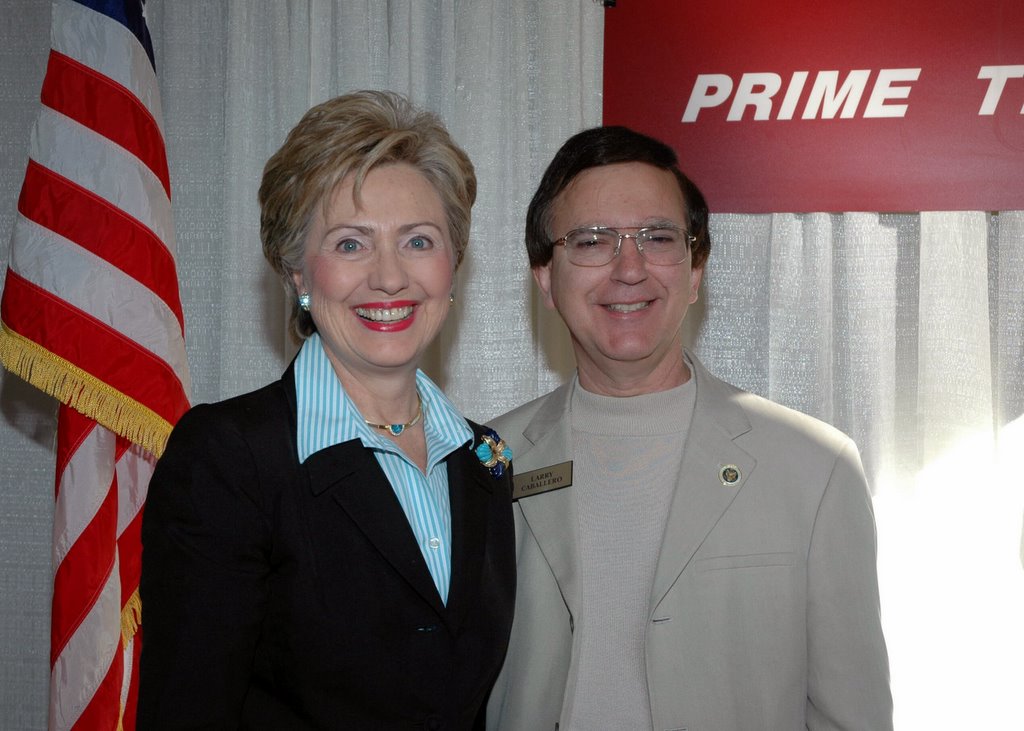
I felt the same excitement again when I was lucky enough to have breakfast with Senator Hillary Clinton at a venue near the Los Angeles airport on Friday.

It all started when Artesia assembly member and 56 AD candidate Tony Mendoza invited me to be his guest at a gala at our alma mater--Cal-State University Long Beach. I was really impressed with the event, which was to celebrate the opening of a Center for Indo-American Studies at the campus, but I was even more excited when I met the grandson of Mahatma Gandhi.

He was such a genuine and sincere man whose love of humanity was quite apparent. It was obvious that his grandfather had left a lasting impression on him.

At the gala, Mendoza told me that he had been asked by an Indo-American host to be his guest at a breakfast for Hillary. Unfortunately, he would not be able to attend because he had a prior commitment.

I told him that I thought he was dumb for not wanting to meet the Senator until he told me that he had suggested that I go in his place. Then I told him what a genius he was!

Of course, Hillary was great, and made a point of greeting each one of us. We had the opportunity to have a picture taken with her before breakfast. She spoke passionately about the issues facing America today, and how disappointing some of the administration's decisions have been concerning the war in Iraq and the hurricane of Katrina.

She was asked if she was planning to run for President in 2008, and she said, "It's too early to think about anything else other than my Senate race in 2006."

She did say, however, that "I do admire South Asian countries who are ahead of America when it comes to placing women in high positions of leadership!"

She also was asked why, during the Clinton administration the Republicans were relentless with their attacks, but now the Democrats have little to say about "the current problems of indictments, cronyism, and incompetence."

Hillary replied that "Americans didn't seem to be ready to hear about the problems in Washington, but now they seem to be. So you will be hearing a lot more from Democrats as the 2006 elections draw near."

In attendance were representatives from Congresswoman Linda Sanchez's office as well as the appearance of Insurance Commissioner John Garamendi and State Board of Equalization John Chiang.

Overall, it was an experience I will always remember.

Tuesday, November 15, 2005

Teachers for Sale

In my most recent small adventures courtesy of the Association of Test Publishers, I've received an email list of teacher name banks for sale by state and region--K-12 through Community College and University levels. Considering all the hubbub in recent years about identity protection, telemarketing and "opting out" lists, it's important for instructors to know that their professional contact information is being bought and sold.
How cheap are you?
Browse K-12 email lists
Browse 4-year University email lists

A few highlights:
  • North Dakota K-12 teachers (9,000+ contacts) are a bargain at $99.
  • California K-12 teachers (100,000+ contacts) go for $1249.
  • The whole country (1.7 million+ contacts) is a steal at $3999.
My last year as English department chair, I kept every catalogue, brochure and "special offer" that landed in my mailbox. By June, I had filled a giant plastic tub to past brimming. Apple logos everywhere. Plump kid faces and pretty teacher-ladies in front of green chalkboards. All the trappings and gimmicks of easiness and user-friendliness. What irritated me most were the packets from Cliffs and Sparks Notes, now billed as "study guides." But when I thought about it, I had to admit it made perfect sense: in a curriculum where novels are seen as "non-standard" material, who wouldn't like to teach the Cliffs Notes version? I thought about the generation of students raised on reading-for-testing, some of whom will become teachers themselves.

This insider's barrage of names for sale may not be surprising for professionals who deflect marketers on a day-to-day basis, but at least it provides us with a massive consumer's view of the educational meat market.

Exercise your right to opt-out.

Friday, November 11, 2005

Teacher Watch: ETS Monopoly Continues

Educational Testing Service (ETS)--famed (or notorious?) publisher of the AP, SAT, LSAT, GRE, TOEFL, GMAT and most recently the HSEE--has again been granted an exclusive contract to administer the "mammoth" testing program for California students, grades 2-11, through 2008-09. According to ETS estimates, the contract is worth $170 million. The final price has yet to be negotiated. Keep in mind that ETS maintains not-for-profit status under section 501(c)(3) of the tax code. This means two things: ETS pays zero federal income tax and does not have to report any of its financial information to the Securities and Exchange Commission. The fact that ETS vies for public tax dollars makes no difference. John Oswald, former president of the Association of Test Publishers and senior VP of ETS Elementary and Secondary Education, is reportedly "gratified" to see the state board reward ETS's performance since 2002-03. Interestingly, Oswald has been fairly open about ETS's essential monopoly: "This might sound a little silly, but I don't really think that we have competitors... We really do approach the market from a very different standpoint. We want to work with states that will use assessments to make teaching more effective, that will invest in professional development programs, and that are serious about curriculum reform. Our trustees have made that a matter of policy." One of Oswald's ETS colleagues, President and CEO Kurt Landgraf, has clarified the corporation's attitude towards (public) money: "[ETS] will never be the low-cost bidder on a contract." Landgraf has also quipped, "I would really be happy if people didn't know what the 'T' meant in 'ETS'. I think of this as an educational-solutions company." Read the full article about Thursday's new contract award in the Los Angeles Times California section. Click links for more about ETS, John Oswald and Kurt Langdraf (as sources for above quotes). Ironically, the first appears on a website run by ETS sometimes-competitor Thomson Prometric. The other appears on the site of Stanford University of Education.

Sunday, November 06, 2005

Teachers--Press Your Union Forward!

I’m an eleven-year veteran California teacher, now in voluntary exile from the public K-12 system. Politically, I’ve registered as “refuse to identify” on the California ballot for the past three years. I hated Gray Davis but voted for Camejo, not Arnold. I’m pro-labor. And with two days to go, I’m still tempted to vote for Prop 75, the so-called “paycheck protection act.” I'd like to clarify why. In years past, I happily paid dues for union representation at the collective bargaining table, even though my district (like many) is essentially a “closed shop” which doesn’t bother with member recruitment anymore. It’s the extra money, approximately thirty-eight percent of the now $927 annual paycheck deduction for my former colleagues, that bothers me still. Where does all that money go? Let’s say where it doesn't. In the past ten years, neither the National Education Association nor the California Teachers Association has resisted corporate interest in the public money pots of compulsory education. I don’t mean Coke machines and advertising on the Internet, but the bedrock of schooling: curriculum, standards, instruction and assessment. That’s what makes “Stop 75” ads comparing union and corporate donations to political candidates and parties frankly laughable and even disturbing. In fact, union dollars haven’t used their muscle to advance a coherent, anti-corporate agenda under the status quo. The National Business Roundtable’s impact on standardization in schools has stood publicly un-critiqued by unions. Neither NEA nor CTA has scrutinized, in any coherent way, the current testing and reporting system. They’ve bought into Orwellian euphemisms like “collaboration” and “professional learning communities"--phrases which belie increasingly top-down, scripted, multiple-choice models of learning. Unions have at times traded teacher pay for professional autonomy and told teachers they will not support “insubordinate” defiance of unconscionable testing practices. Even with heavy access to the Democratic Party, the NEA pressed for more funding of the No Child Left Behind Act, rather than an overhaul and re-examination of school policy. While both NEA and CTA advocate for important medical benefits, salary, tenure, and retirement investment, they don’t press for more funding of ongoing teacher education. I’m not talking about some in-house training workshop run by district lackeys, but subsidies for serious study, writing and research. (I know, I know: it’s pie in the sky for the lowly schoolmarms.) No union resources have been used to raise awareness about the financial interests at stake for industry lobbying giants such as the Association of Test Publishers and the Association of American Publishers. I haven’t read a single critique of how public schools are used as a marketing platform for assessments in the wider business world. No foray of union voices clamored when the nonprofit Educational Testing Service was granted a virtual monopoly on test administration and reporting in California from Grades 2-11 in 2002--and then was commissioned to develop, administer, and score the California High School Exit Exam. No one complained when Grey Davis, in his final election year, abruptly allocated millions for a quick buyout of newly-minted books with the California standards branded into the margins. (Then-CTA-President Wayne Johnson outed Davis for soliciting campaign money as trade for political support--but why was Johnson surprised?) When I attended the 2005 annual Association of Test Publishers conference in Scottsdale, Arizona, I saw representatives from Microsoft, Vantage Learning, Thomson Prometric, ACT, Harcourt, The College Board, Linux, Caveon Data Forensics, Pearson VUE, and Educational Testing Service. Even Famous Amos of chocolate chip cookie fame was there, singing and playing a kazoo onstage. The absence of educators, state and local school board members and other officials was noted for the record at least twice. But they moved on without us. And there were no union watchdogs at the table. Ironically, the main reason given by most supporters of Prop 75 is that “unions have an agenda.” What agenda? My problem is that the teachers’ union--at the highest and most prominent level--has provided very little organized vision and resistance. The teachers’ union knows better than anyone that a textbook isn’t just a textbook anymore, and that information and test graft are easily the new wave of public waste. We need more sophisticated arguments than simply “Our kids need books!” or “We love kids!” I’ve seen pictures of CTA President Barbara Kerr beaming with the Gubernator before and after his election. Under her leadership, the union agreed (with reservations?) to permit the “borrowing” of $2 billion that never got returned. Current union ads whining about Arnold’s “betrayal” would be sad if they weren’t so infuriating. Did CTA--bankrolled by the rank-and-file--really believe The Terminator would be a true advocate for education? That union compromises hadn’t already set the stage for a smile and pat on the head (or the behind)? What teachers need is organized civil disobedience and coherent philosophical leadership, not pretenses of “reform” inside a complacent system. Make unions rally the rank-and-file. Make unions stand up and defend their expenditures. Then I’ll happily and proudly write an extra check.

Wednesday, November 02, 2005

Teacher Watch: Sandy Kress--Know this Face

President Bush's central advisor on education policy, lobbyist and attorney Sandy Kress, also consults some of the most highly invested "pro-testing" interests in the country. Check out Jim Trelease's article, posted October 15 at http://davestoner.com Kress recently spoke to Ray Suarez on PBS about Connecticut's lawsuit against the federal government over No Child Left Behind. You'll notice how, whatever the alternatives, testing is the starting and ending point: "[T]here's lots of flexibility in this Act for Connecticut to do what it wants. They can do formative testing. They can do more in-depth testing. They can do testing by the way they can insist upon their contractor coming back faster than four months. They can do lots of things. The point is that parents and taxpayers want to know each year on a comparable assessment how youngsters are doing." (italics added) Read the complete discussion at http://www.pbs.org/newshour/bb/education/july-dec05/nclb2_8-24.html

Sunday, October 30, 2005

Are Teachers at Odds Over Prop. 74?

By LAUSD Teachers Larry Caballero and Tony Mendoza
From Column Left - Los Cerritos Community News- October 28, 2005

We were both surprised by Sunday's Los Angeles TIMES front page story entitled "Prop. 74 Has Some Teachers at Odds."

Apparently, there are some teachers in California who support it while the overwhelming majority of public school teachers do not. According to the story, teachers "are nervously wondering who among them will lose their jobs". If 74 passes, it would supposedly lengthen probationary periods for teachers and ease the rules for firing poor-performing veteran instructors.

The story also mentions how 74 "could rid California schools of ineffective instructors who curse at students, or talk on cell phones and show the movie Legally Blonde during class."

Frankly, we don't understand why some teachers are not opposed to 74 since it is a poorly drafted initiative which will not do anything to improve education in the classroom. It will also make it harder to remove poor teachers because schools must first find a qualified teacher to replace the one they want removed.

Even State Superintendent of Public Instruction Jack O'Connell said, "The governor won't improve education with his half-baked ideas" since 74 will only make teaching less attractive in our state.

It's amazing to read that some teachers even believe that without 74, lazy and incompetent teachers will continue to teach in our classrooms. The reality, of course, is that very little good will come out of this proposition for several reasons.

First of all, the local school site administrator already can remove a poor teacher by simply documenting the infractions and by allowing the teacher a certain period of time to improve. If the teacher does not, then he's removed from the classroom.

The problem is not unqualified teachers as much as it is lazy administrators who don't do their jobs. It's like blaming the illegal immigrant who crosses over the border for wanting a job, but we don't blame the employer who hires the immigrant.

As for these teachers remaining in the classroom, we can assure you as veteran teachers that very few poor teacher survive very long in the classroom. No, they are not removed by the administrator, they choose to leave after their students confront them, and they will.

We're sure you remember when you were a young parent raising your small children. If you don't keep them occupied and busy doing something which is relevant, they will make your lives miserable with their behavior. It's the same in the classroom.

Teachers who are disrespectful to students or show movies every day hardly exist in today's classroom. The students would not tolerate it. Even one of the few teachers who support 74 had to admit that teaching "is really a draining kind of job. You
put so much of your heart and soul into it. I am exhausted every day."

At least, we agree with her on that, but to think that Proposition 74 is the answer is wrong. In order to improve our public schools, we need a state legislature and the community to work with the teachers and administrators.

Using ways to divide us all will not strengthen our public schools. This proposition will only cause more qualified people to leave teaching or not to enter the profession in the first place.

Vote NO on Proposition 74.

Monday, October 24, 2005

The S(H)MO Model--Part Five

The 2005 ATP "Innovations in Testing" conference provided glimpses of the latest in curriculum and testing technology, straight from the industry professionals who research, develop, design and sell it.

At a table during luncheon the first day, I found myself with representatives from the Buros Center for Testing and--I'm serious--the Institute for Mental Measurement at the University of Nebraska. Two senior faculty had brought along two star grad students in psychometrics, who were both trying to pump me up to enter the field. "The demand is so great," one told me. "I've already been guaranteed a job. This is very common now. The money is incredibly good." (Little did he know: I was just one of those "teacher" people--unqualified, as Lee Jones of Riverside Publishing would say, to write her own test items.)

Setting aside my objections about relying solely on automated testing to evaluate individual learning--and individual people--I thought about how the wave of national demand might in fact be making it increasingly difficult to find highly qualified people to design the tests teachers are required to implement. (Forget the "highly qualified" teacher: what about the "highly qualified" psychometrician?)

As in any industry, overconsumption of a product does not necessarily guarantee that the manufacturing process will protect quality to meet demand. In fact, inflated demand and frenetic production increase the probability of error. Right now I'm only talking about test design. You may remember the gentleman from Thompson Prometric, who said he could "curl my hair" with stories about industry complicity in designing poor (or marginally ethical) workplace test instruments. But this doesn't include test administration, data management, and score reporting. How many times has your district mixed up test booklets, miscopied items, called committees to re-word in-house assessments, tried to re-route data that was mis-crunched the first time around? How many times have you asked yourself: Given the errors and inconsistencies I can see without looking very hard, what else is underneath? Why would conscientious teachers be labeled "defiant" or "insubordinate" (even by union leadership) if they questioned the instrument itself--or refused to administer it?

Consider: I saw one demonstration of cutting edge teacher certification assessments now used in England. In what's called "simulation" testing, would-be teachers must prove themselves competent in the domains of spelling, using statistics, word-processing, spreadsheets, database management, PowerPoint, email and Internet maneuvers. The keyboard literally tracks and logs the number and order of steps chosen to complete each task and then determines the level of teacher efficiency. This final threshold for UK certification reminds me of temp-worker tests I took between jobs in college. The emphasis on simple clerical skills (what Susan Ohanian has called "paraprofessional" skills) indicates that there's decreasing expectation for teachers to ask questions, innovate, or create. The consumer model demands obedience from teachers. And here's the rhetorical trope: The more obedient you are, the more you'll be praised for being an active and creative participant!

Mingling through poster sessions in the hotel lobby between breakout workshops, I found a vast range of quality and polish. Some companies, such as Promissor, Thomson, and Pearson, used top-of-the-line electronic equipment to display their products. A few showcased research presentations were simply PowerPoint print-outs tacked on boards. One woman, who worked in Florida teacher certification testing, handed out packets. She told me that in the previous year, thirty-five thousand tests had been ordered for teacher certification--but that the actual demand had been one hundred thousand. She said that the state was having problems keeping up with the demand. That they were trying to move toward automated essay scoring by scanning teachers’ handwritten texts into computers.

I found three companies pushing automated essay scoring for students: Pearson VUE (with KAT, Knowledge Assessment Technology), ETS Pulliam (Criterion Online), and Vantage Learning (Intellimetric). Company spokesmen emphasized that typing was the key to making this most efficient in classrooms, but when I asked how companies dealt with essays when computers weren’t available, say, or writing in the primary grade levels, I got this interesting tidbit: Handwritten essays can be shipped overnight to India, where they are transcribed at very low cost--with automated scores still returning to the teacher within a day! (Such transcription work was undoubtedly performed by some of the non-PhD caste in India, though Bill Gates had made no reference to this in his speech.) When I expressed doubt, one salesman at Vantage seemed so proud he had to insist. “It sounds inefficient,” he said. “But it’s affordable and it works. You’d be surprised.”

The buy-in for English teachers seems obvious: test corporations can reduce your grading workload. But there’s something else, too. If teacher workload can be reduced by automation, why decrease class size? New brands of “Teachnology” can reduce inefficiency by streamlining the human teachers and students out of each other’s way. For example, eInstruction was demonstrating its current line of Classroom Performance Systems Technology (CPS) programs. Individual students use remote control devices to answer banks of multiple choice questions on the internet. (Note: Ownership of these massive “question banks,” by the way, is a very big deal for ATP.)

With CPS remotes, teachers can employ LCD displays, PowerPoint and SmartBoards to broadcast formative “assessment practices” on classroom screens while the students click their responses. Then the computer--not the teacher--selects successive questions based on the group’s aggregate results for each item. Every time the class responds to an item, the screen can display a bar graph and percentage of collective results. Instant, outcome-based feedback! (Or: lots of trees but no forest.)

It was amusing that we conference attendees used the CPS remotes to complete evaluations for presentations, because over the course of three days, various people would step up to a microphone somewhere and remind us to “make sure you return the CPS that you picked up by mistake.” Here was a crowd of professional adults and the CPS units were still getting lost, pilfered, and probably broken. I thought: What if these people were teaching five sections of seventh graders every day?

That is, I suppose, an imaginative, funny, and frankly inefficient question.

Thursday, October 13, 2005

The S(H)MO Model--Part Four


The morning I dressed for the first day of the ATP "Innovations of Testing" conference in Scottsdale, my husband and I had the television tuned to C-SPAN. There, in a re-broadcast from just a few days earlier, Bill Gates was addressing the National Governors' Association at their annual meeting. I recalled that only three weeks before that, George Bush had delivered the first State of the Union Address for his second term, where he lauded the "success" of No Child Left Behind, the positive results of testing, and articulated his mission to "demand better results from our high schools."

With perfect rhetorical symmetry, Gates railed against the failure of public high schools, noting that the U.S. ranks 16th among industrialized countries with its graduation rate of 73%. (Gates did not clarify differences in total enrollment or sheer numbers of graduates. A few examples at the top of the list, though Gates did not include names: Denmark has 100% graduation, Norway's a close second at 97%, and Germany comes in third at 93%. Discuss.)

Even as Gates conceded, "I'm not here to pose as an education expert," he followed by saying, "I head a corporation and a foundation." Then he proceeded to elaborate on his observations about specific campuses and key lingo of the test-to-success program. Gates lamented the U.S.'s lack of science PhDs compared to those in India and China, without clarifying the longstanding socio-economic stratification in those countries. He took time to promote his own private foundation's recent financial investments in American schools. One of his most interesting critiques was that only privileged students were studying Algebra II in high school, while poor, minority others were stuck learning to balance a checkbook. (I've seen plenty of AP calculus students who would benefit from practical clues about managing money--and watching for corporate scams--but that's an aside for now.) Variations of Gates' speech were published in national newspapers the following week (the LA Times printed one version March 1).

The evangelical terminology and its business agenda makes a kind of perfect wallpaper--you barely notice it. You take it for granted. When someone as rich as Gates talks about education, glosses over a phrase like "improve schools" or "settle for nothing less," it's easy to see how people figure, "He must have better things to do. So he must really care."

The timing of the ATP conference after such perfect prepping was hard to miss. This became more than a gut impression once the conference began. The keynote speaker, Gaston Caperton, new President of the College Board and former Governor of South Carolina, referred to the same talking points Gates did. Caperton mentioned that he was just coming from the NGA conference, and sometimes he didn't even cite Gates. The same was true when one speaker from Pearson Assessments addressed the general assembly as part of a panel called "Titans of Testing."

A few other highlights from proponents of the managed care model of education:
  • "Teachers are not trained to use formative assessments and change teaching on the fly, teachers are not qualified to write their own items...Districts are turning to test publishers for input on formative assessments to prepare them for high stakes tests...Test corporations need to be uncompromising in teacher training for use of benchmark assessments." (Lee Jones, President, Riverside Publishing)
  • "We need to acknowledge the similarities of our various textbooks--there's not that much difference [among company textbook products]...If teachers buy in [to focused study guides, shared plans and other data] they might be able to test less--because formative tests are more integrated [into curriculum]." (Steve Kromer, VP and General Manager, Pearson Educational Measurement)
  • "I'm not an expert in the field--I bring the business point of view...Formative assessments will replace teacher tests. Turning data into knowlege is key. We need to provide flexibility to non-expert users, be a facilitator of change without becoming the enemy--really reach out to unions, etc." (Jeff Galt, Harcourt Assessment)
  • "People are turning to testing corporations and not the textbook companies for tests and formative assessments...Our Natural Language Processing technology can help scan millions of sentences to choose for reading assessments...Professional development and consulting are integral parts of our offerings, but "data driven" decision-making scares teachers...Teachers teach because they love children, and data is noise. They should teach to standards, not in the same way they always have, but it's not test prep. Tests should be tied to textbooks, assessments, and standards." (John Oswald, Senior VP and General Manager, ETS Elementary and Secondary Education)
It's important to emphasize again that all the discussion about "teachers" and "classrooms" was uni-directional--from "us" to "them." The image of teachers as incompetent, scared of numbers, and incapable of vision was easy to perpetuate inside the "in-crowd." Our absence was noted, but was as moot as it was mute. They pressed on, unchallenged--no doubt comforted by their well-established and promoted national political and corporate agenda.

[Conclusion next week...]

Saturday, October 01, 2005

The S(H)MO Model--Part Three


At the 2005 ATP "Innovations in Testing" Conference, I was privy to more goodies than I knew what to do with. When I first checked in, I received the ATP logo conference tote bag, packed with treats above and beyond the giant notebook tidily organized with daily agendas, speaker bios, and corporate sponsor ad-sheets. A few highlights from the tote as well as things I picked up during poster (advertiser) sessions over the three-day period:
  • Blue and orange M&Ms in a sealed baggie, labeled: "You can't manage what you can't measure." (Caveon Data Forensics)
  • A blue luggage tag, inscribed: "College Board: connect to college success, Research and Pyschometrics."
  • A laser pointer: "LaserGrade: Your computer Testing Specialist"
  • A puzzle-shaped piece of chocolate stamped with the Thompson Prometric logo.
  • An Educational Testing Service (ETS) calendar and notepad.
  • A green Performance Testing Council (PTC) button that we were encouraged to wear throughout the conference. (I couldn't bring myself to do this. Most people didn't.)
  • A Thompson Prometric Testing flow-chart map, made into a kraft-wrapped puzzle
  • A dainty box of RecruitMints: The flavor that lasts a lifetime! Your best career investmint! (Measured Progress)
  • A bag of Famous Amos Cookies: "Join us for our closing keynote speaker Wally Amos, 'the face that launched a thousand chips.' " (more on this later)
If there was one theme, it was advertising. Even though three of ATP's four divisions are not directly related to education, it was startling how promotional language used by both business and education corporations fit seamlessly, interchangeably together. When I didn't recognize a particular company name, I often had difficulty discerning at first whether it was in the business of testing kids and schools or employees. The overlap is merely tangible evidence of the Business Roundtable's powerful influence on education policy, something Susan Ohanian has documented for years. I found myself having Professional Learning Community and WASC committee flashbacks.

A few highlights from some of the prominent sponsors:
  • Questionmark Perception: Explore the enclosed CD and get to know the benefits of using effective and interactive assessments throughout the learning process.
  • Professional Examination Service: Delivering Client and Stakeholder Satisfaction
  • The Pearson VUE difference! [...]Biometric processes help authenticate valid test takers from imposters... Truly collaborative customer relationships featuring service excellence...
  • Promissor: Knowledge Beyond Doubt, The Total Solution Provider
  • Thomson Prometric: Enhanced testing capabilities from us. Improved testing solutions for you. Measuring success.
  • ETS Pulliam: Instructional Data Management System, Standards Based Teaching, Learning and Accountability.
  • E-Instruction, Classroom Peformance System (CPS): Successful Training is No Accident.
  • Vantage Learning: Intelligent Technology for Intelligent Decisions, Measuring Success One Student at a Time
  • Integral 7: How Can You Effectively Manage Your Business Without Effectively Managing Your Data?!
  • M2: Research and Psychometric Services: Meaningful Measurement
  • Castle Worldwide, Inc.: Building Relationships, Offering Guidance, Tailoring Solutions.
There was something else equally striking: a co-option of language (or glosses of language) from the humanities and from social justice movements, in order to articulate, promote, and justify test-as-measurement.

In the opening session, the Industrial-Organizational (I.O.) Division chairman gave a talk with an almost "I Have a Dream" tenor. As best I could, I scribbled notes on what I could get verbatim. His speech crescendoed with this point: "I would like to see a qualitative change in how the public views testing, to see testing as the solution not the problem. Testing as the best way to judge who's qualified. There is nothing better than testing to do this. I look forward to the day when a job applicant will be stunned if there is no testing." This speaker emphasized the urgency of lobbying efforts, PR and legal monitoring, and promoting test industry interests to the general public. He also pointed out that the strongest resource of ATP was in fact the I.O. Division itself, needing to lead the drive for change.

So much for on-site vertical teams. I thought about this a lot during the conference. While so many individual teachers were hard at work inside isolated classrooms--convinced by teacher-training workshops that the big picture is too daunting, too overwhelming, too irrelevant, that their day-to-day work with individual kids is the only precious thing that counts--here was a convention of professionals revving massive financial, political and rhetorical engines to drive the entire educational train down the track. These folks spare no expense. They stick to time limits in their meetings. They make no apologies for their interests. They don't whine.

And as long as teachers buy in to doublespeak about "collaboration" and "standards," ATP doesn't need smoke-filled back rooms, either.

[Continued next week...]